

Hospitality operations platform
Glem Next
A product platform for hospitality businesses that needed booking, ordering, payment, and operations in one place.
Glem Next
Platform
Hospitality operations
Not just bookings.
I built the product around one practical chain: people book or order, pay, and the business keeps control of what happens next.
One connected product
Guest to operator
Book. Pay. Run it.
Customers get through the flow. Staff gets one clear place to handle it.
01
Book
02
Order
03
Pay
04
Operate
Glem Next grew into a serious piece of kit.
What started around reservations and ordering became a full digital operations platform for hospitality and activity-based businesses. Marketing pages, bookings, scheduled activities, online ordering, checkout, customer accounts, embeddable widgets, and a proper admin environment behind it all.
The interesting part is how much real business logic lives in it. The kind of stuff that sounds boring until it becomes the difference between a nice demo and something people can actually run a business on.
Service chain
From click to kitchen.
01
Discover
02
Book
03
Order
04
Pay
05
Confirm
06
Operate
The end-to-end part is what makes it strong.
Someone discovers the business, books an activity or places an order, pays, gets confirmation, shares it, comes back later, and the operator has the tools to keep everything moving on the other side.
It is one system with a lot of jobs to do, and it had to support different ways of doing business without turning into spaghetti: recurring reservations, fixed-date events, takeout and delivery, guest checkout, logged-in flows, and widgets that can live inside existing websites.
Real logic
Boring until it matters.
01
Time slots
02
Participant counts
03
Waiting lists
04
Delivery ranges
05
Opening hours
06
Upsells
07
Shop rules
08
Organisation settings
09
Payment states
10
Admin overrides
Customer
Keep the flow moving
Progressive steps, clear summaries, countdowns, payment overviews, confirmation states, and fallbacks when availability changes.
Operator
Keep the business moving
Orders, reservations, products, modifiers, waiting lists, permissions, recurring items, blockers, locations, and live updates.
Platform
Keep the system reusable
Reusable flows, configurable shop logic, embeddable widgets, and organisation-specific rules without making every client feel the same.
The customer side quietly prevents chaos.
The flows are built around keeping people moving. Progressive steps, clear summaries, reassurance where it matters, payment overviews, expiry countdowns, confirmation states, and fallbacks when slots disappear.
That UX work is not flashy on its own. It is the discipline that stops operational complexity from leaking into the customer experience.
Customer-facing surfaces
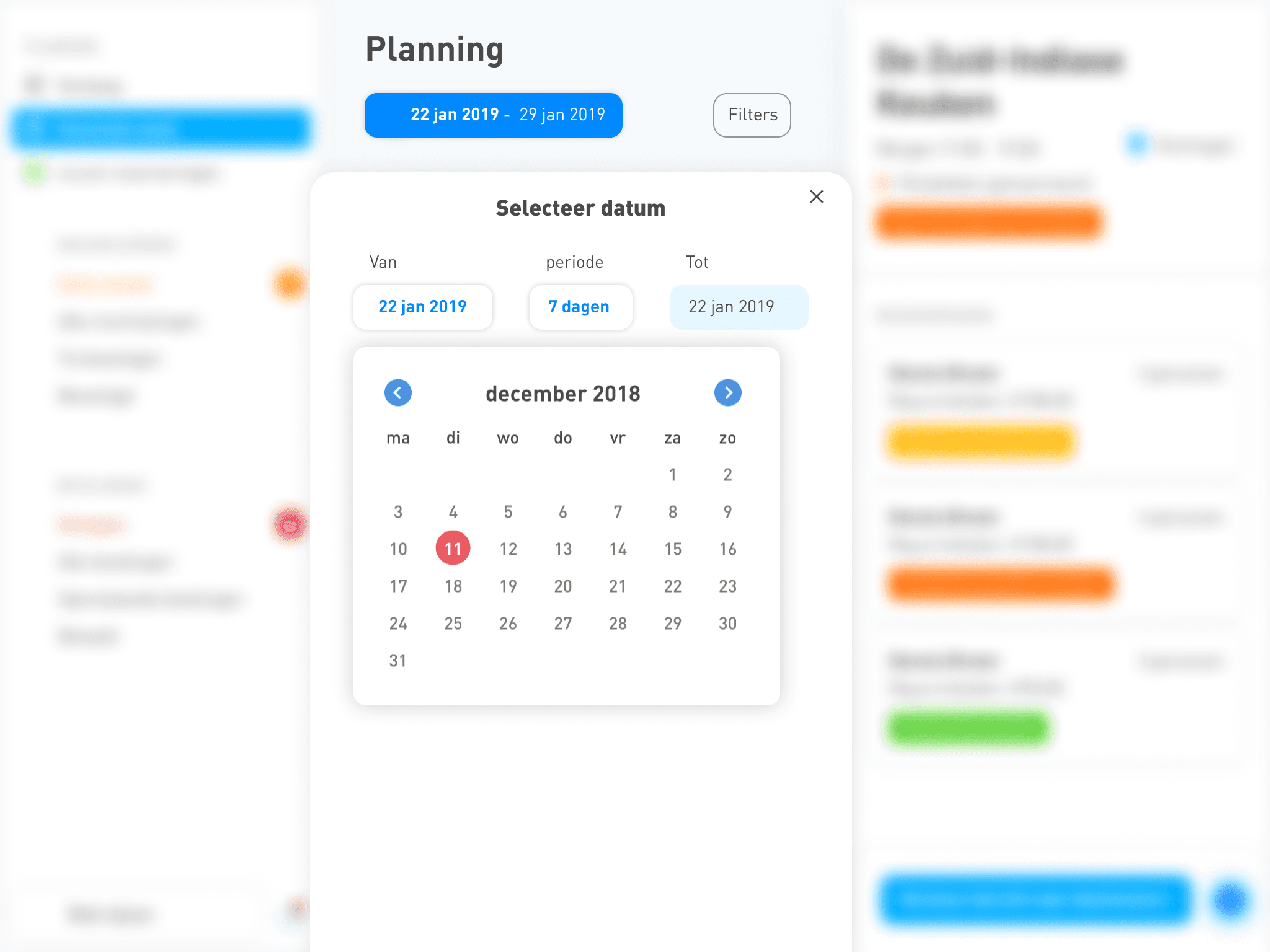
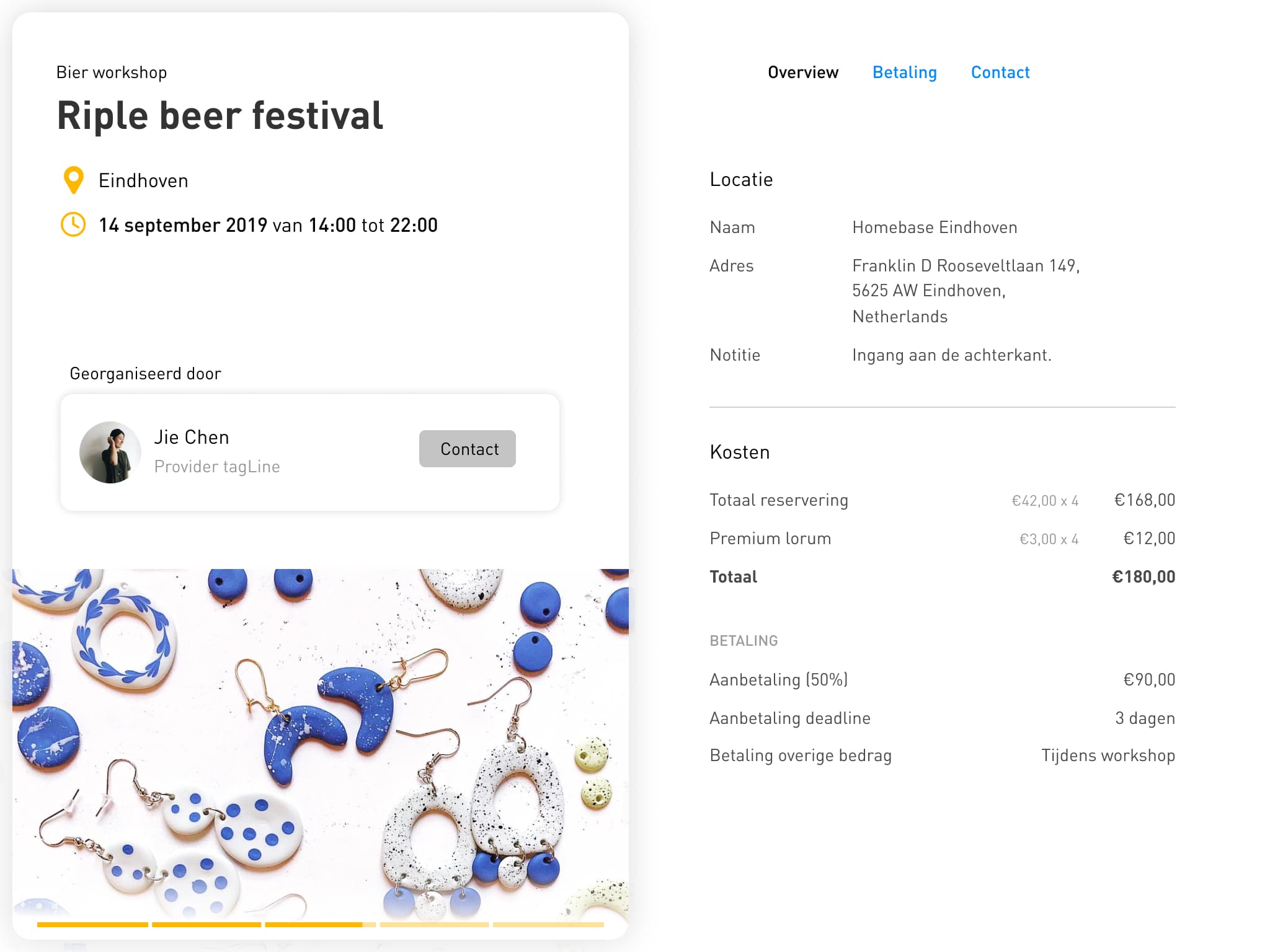
The recovered assets show how Glem Next moved between event pages, booking flows, mobile detail views, and branded campaign material without losing the product thread.

Brand system
One visual language
The same product had to support marketing pages, embedded flows, social cards, email headers, booking, ordering, and admin operations.
Progressive flows
Back office
Where these systems usually crack.
01
Orders
02
Reservations
03
Organisations
04
Locations
05
Products
06
Modifiers
07
Upsells
08
Slot blockers
09
Permissions
10
Payments
11
Waiting lists
12
Live status
The operator side kept going.
Orders, reservations, organisations, locations, products, modifiers, upsells, recurring items, slot blockers, permissions, payment details, waiting lists, and live updates. This is where a lot of transactional systems start to feel thin. Glem Next did not.
The admin environment had to feel active and operational, not like a static list of records. The business needed to see what was happening, change it, override it, and keep moving.
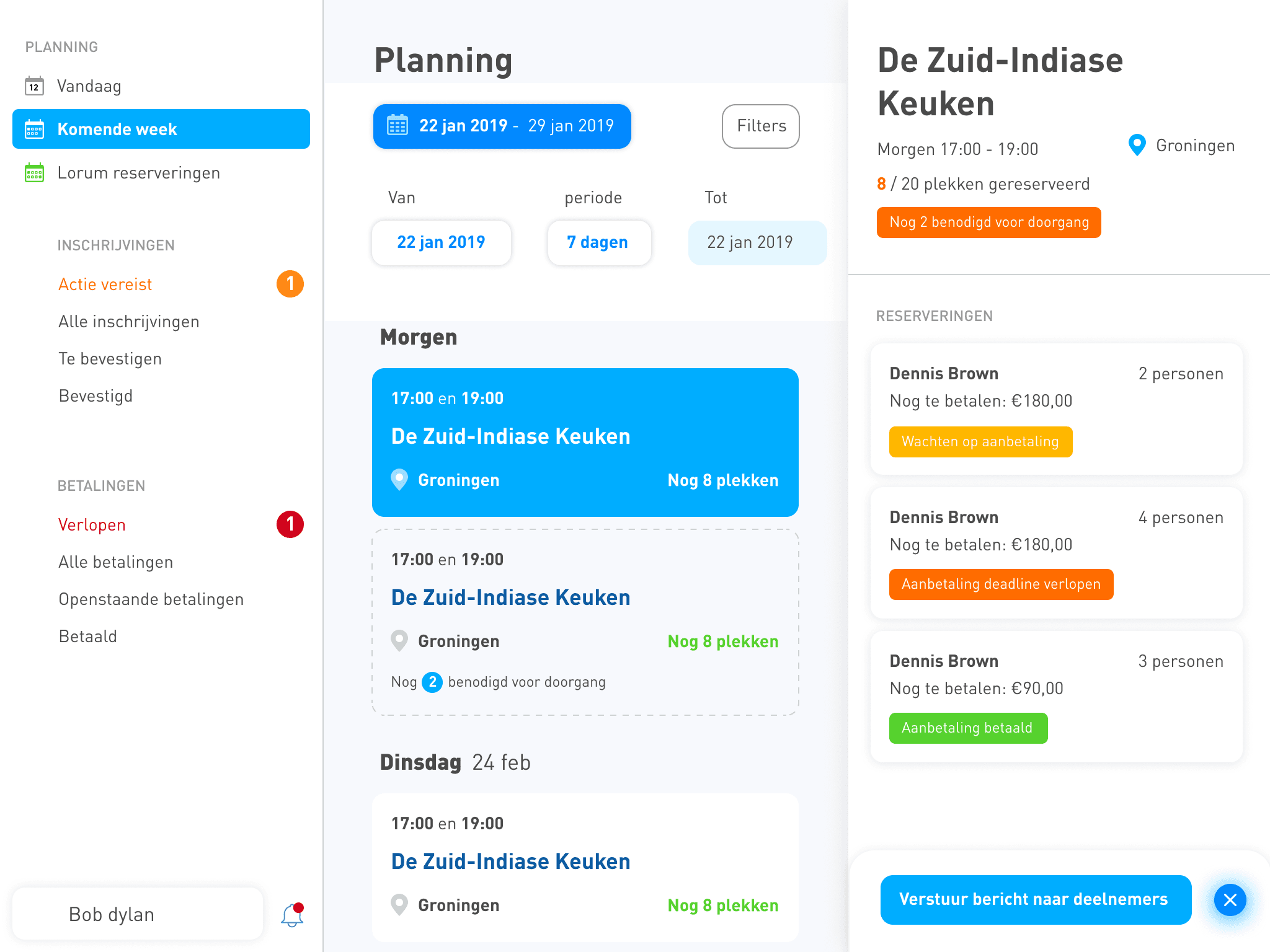
Operator-side evidence
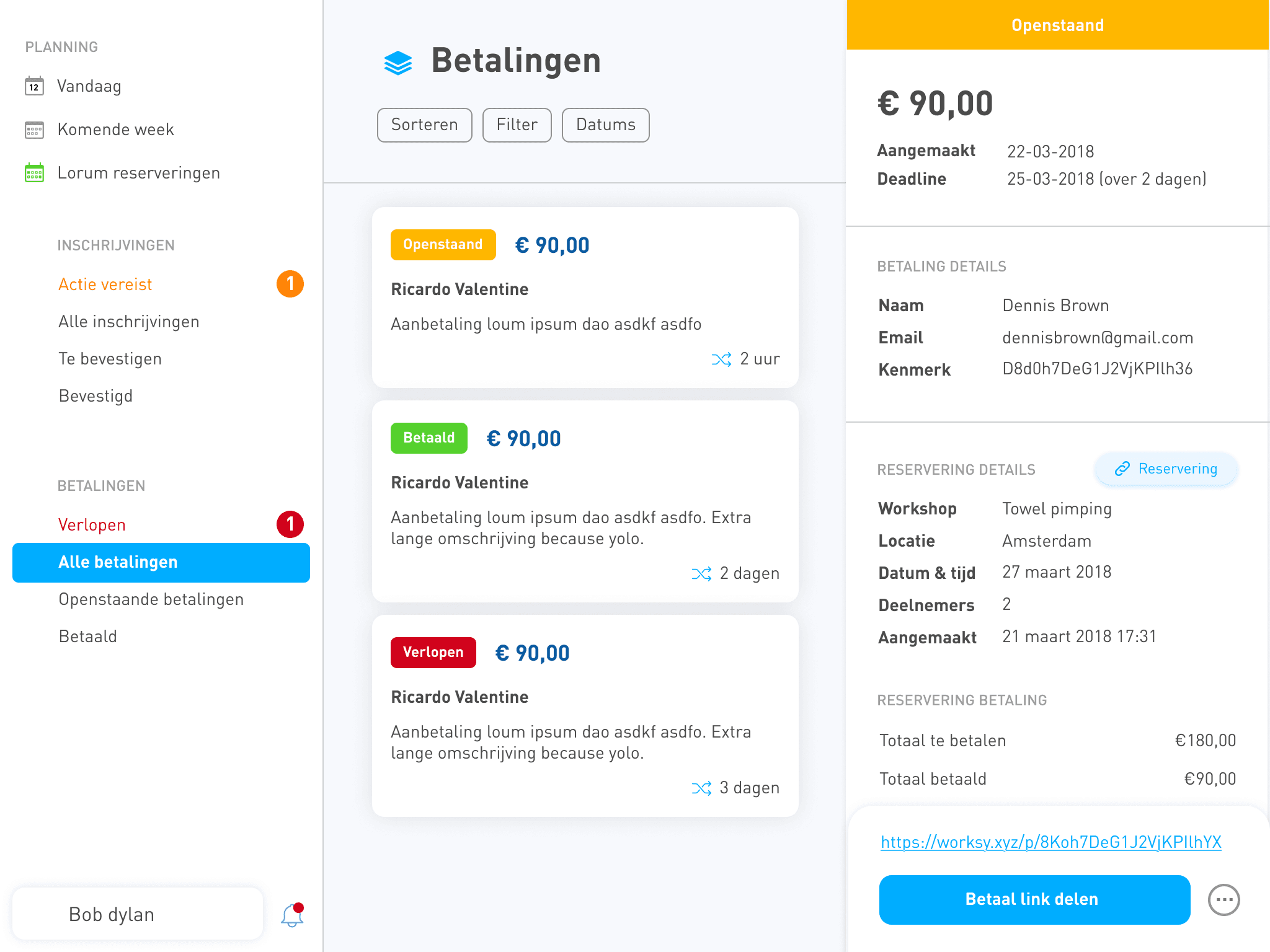
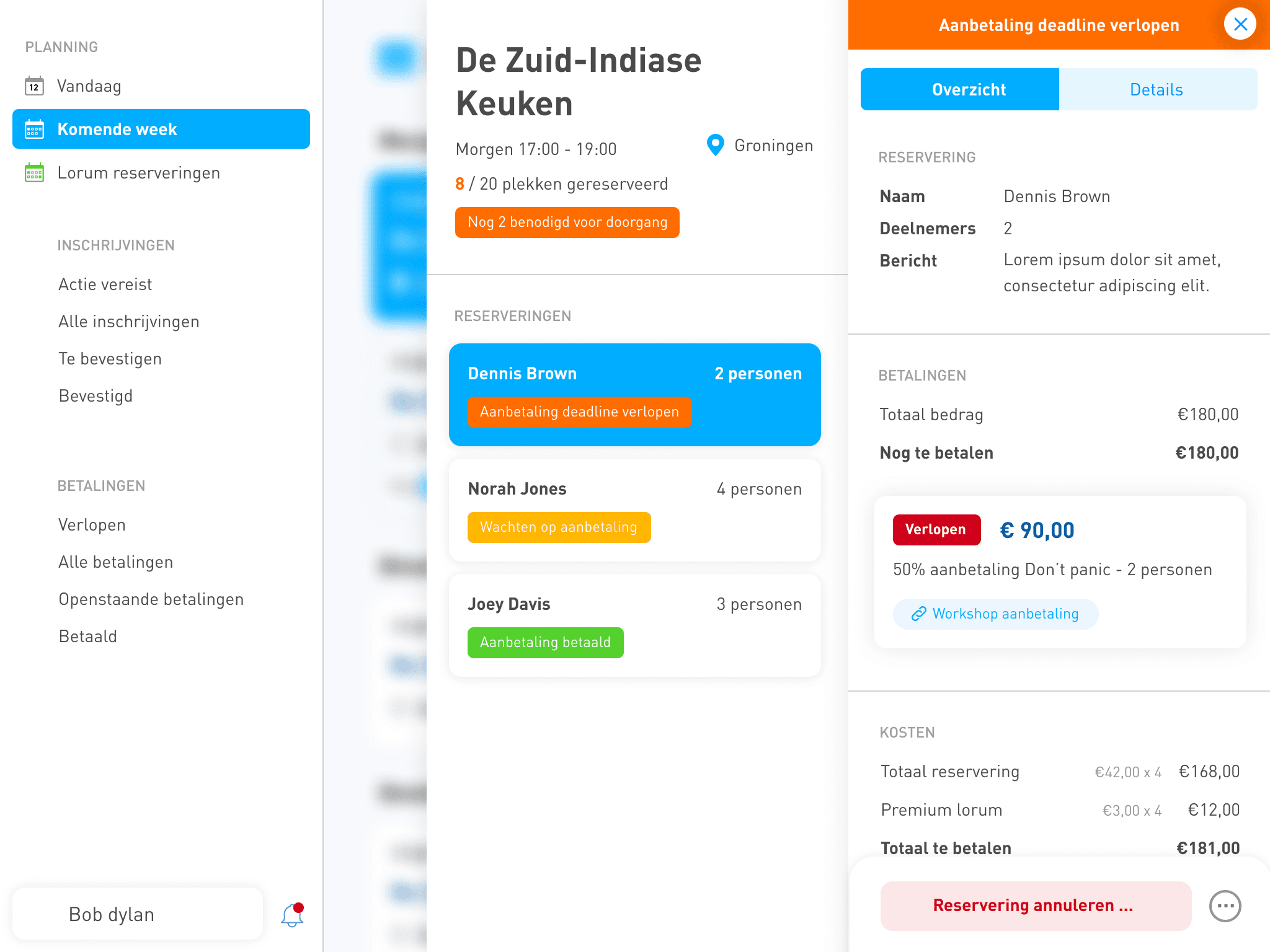
The admin screens make the operational depth visible: planning, payments, expired deadlines, reservations, capacity, and participant actions all lived in the same working surface.
The visual layer mattered too.
Custom DIN Pro typography, branded colours, icons, illustrations, and segmented landing pages gave the product a designed surface instead of a generic software shell.
The split between marketing pages and embedded flows worked especially well. One side could persuade and explain. The other could stay focused, quiet, and task-first.
This reads as a full product platform, not a single website.